
The Backup Was Always a Clock
GPS has no fallback, the program to upgrade it just collapsed, and the most credible replacement is a clock the Royal Navy bolted into a robot submarine.

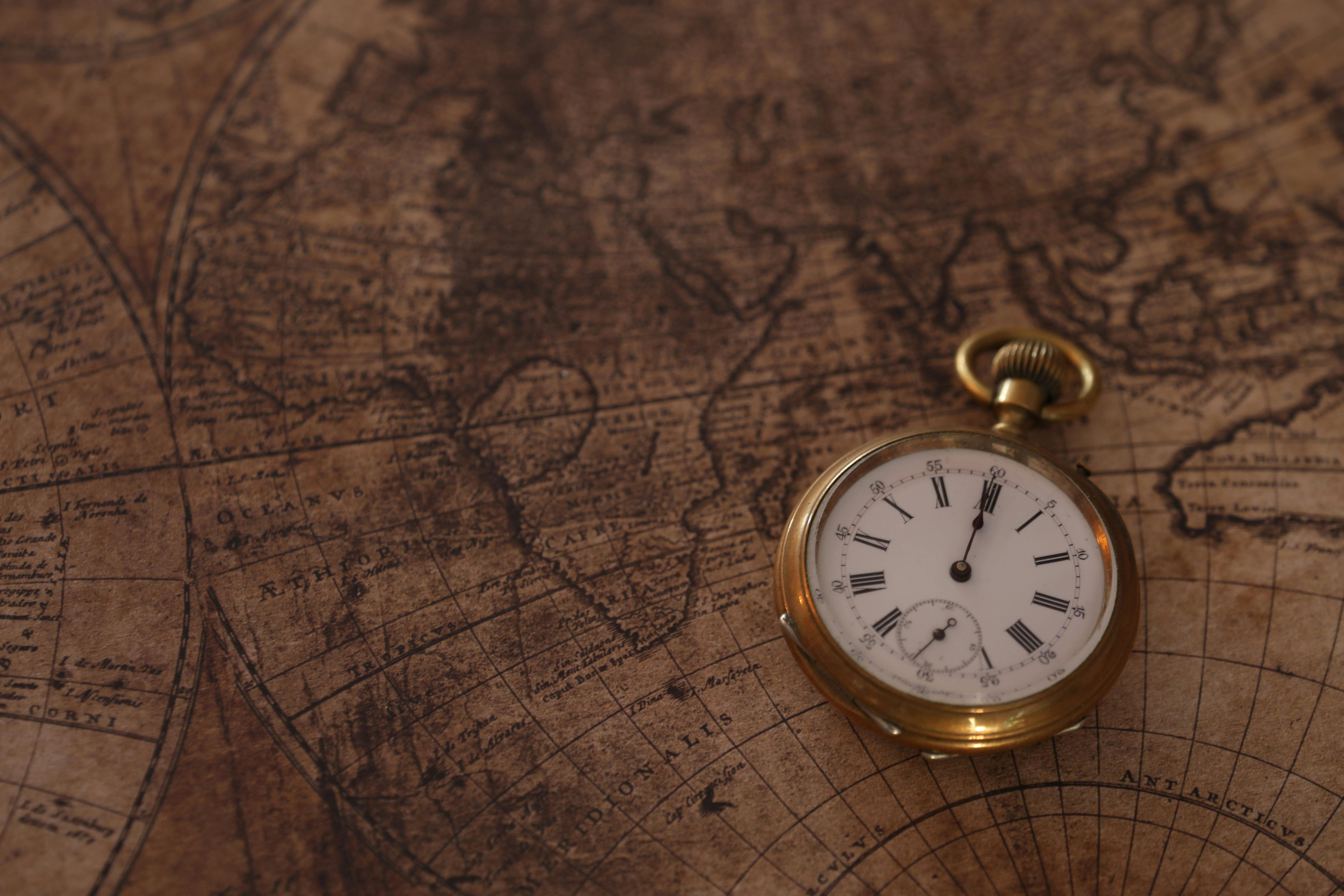
On the night of 22 October 1707, four ships of the Royal Navy struck the rocks of the Scilly Isles. Two thousand sailors drowned in the dark. Admiral Sir Cloudesley Shovell’s fleet was coming home from Gibraltar and the men aboard were experienced, professional sailors. Salty, in our vernacular. They had charts, compasses, leadlines, and centuries of hard-won seamanship. What they did not have was the time.
That might sound like a figure of speech but it was literally their cause of death. Longitude (your east-west position on a spinning globe) is a clock problem. Your local time comes free from the sky: noon is whenever the sun sits highest overhead. What the sky won’t tell you is the time back at a fixed reference like Greenwich, and the gap between the two is your position. The earth turns fifteen degrees every hour, so every hour of difference puts you another fifteen degrees around the world. That gap is the only thing a clock at sea has to hold onto. In 1707 no clock could hold it on a pitching deck through cold, heat, and salt. The fleet did not know what hour it was at Greenwich and it did not know where it was. So it sailed full into rocks that sat exactly where rocks had always sat.
I’ve been thinking about Scilly lately because the most in-demand clock in human history is more exposed to failure than ever.
On 1 June, Foreign Policy ran a piece called The Epidemic of GPS Jamming, cataloguing interference from the Baltic to the Strait of Hormuz. On 5 June, the physics YouTube channel Veritasium published a forensic hunt for whatever has been jamming GPS across Europe, tracing it to a space-based Russian source, built on research by Todd Humphreys at UT Austin. The same day, 404 Media reported that Steven Murdoch, a security researcher at University College London, had worked out that every GPS satellite has quietly been broadcasting encrypted military key traffic for about twenty years in a 176-bit field that every receiver on earth pulls down and almost nobody had ever bothered to read.
And behind all of it sits a fact the viral cycle skipped. On 17 April 2026, the Space Force cancelled the program meant to modernize GPS’s own ground control, after sixteen years and $6.27 billion against a $3.7 billion original estimate, calling the integration timeline “insurmountable.” The most advanced military on earth could not finish the upgrade to the system that has no backup.
So the natural conclusion is that we need a new way to know where we are.
That is the wrong conclusion, and getting it wrong is how you misread the entire problem.
It was never about where you are
Under the hood, GPS is actually a constellation of atomic clocks in orbit, each one broadcasting, very precisely, what time it thinks it is. Your receiver listens to at least four (in reality many more), measures how long each signal took to arrive, corrects for the fact that time itself runs measurably faster 12,500 miles up, in the weaker gravity where the satellites orbit, than on the ground (thank you, relativity), and solves for the only position consistent with those independent travel times. A GPS fix measures time and converts it into space at the speed of light. Position falls out of timing. Timing is the load-bearing wall.
Position falls out of timing. Timing is the load-bearing wall.
Which defines the whole problem because the infrastructure that depends most desperately on GPS does not navigate anything at all. The power grid uses GPS timing to keep its phasor measurements synchronized across thousands of miles of transmission line. Financial markets and trading floors stamp transactions against it. Cellular networks lean on it to hand your call between towers. Fifteen of the sixteen critical-infrastructure sectors the Department of Homeland Security tracks run on this one signal, and a 2019 RTI International study commissioned by NIST puts the cost of a GPS outage near a billion dollars a day. None of those systems wants to know where it is. They want to know what time it is, and they want every other node in the system to agree down to the nanosecond.
The Murdoch discovery lands harder once you see this. For twenty years the thing we treat as a humble positioning utility has also been a covert military broadcast channel, quietly distributing the cryptographic key material that keeps military forces in sync. That makes GPS a target twice over. Kill the signal and the forces that depend on it lose their position. Kill the signal and they lose their secure communications too, because cryptography is the backbone of every military network. One strike, and they go blind and mute in the same instant.
So the real question is how to keep time when the clocks in the sky go dark. We have answered this question before.
Harrison’s legacy
The Scilly disaster was bad enough to move a government. In 1714, Parliament passed the Longitude Act and offered up to £20,000 (about $5 million in today’s currency) to anyone who could solve the problem at sea. A board of the era’s grandest astronomers assumed the answer would come from the heavens, from charting the moon against the stars.
It came from a carpenter. John Harrison, a self-taught clockmaker from Yorkshire, spent four decades building a sea clock that would hold Greenwich time through anything the ocean threw at it, and the Board spent most of those same decades refusing to pay him his reward. His H4, finished in 1759 and sea-trialed to Jamaica two years later, was the size of a large pocket watch and lost about five seconds on the crossing. The astronomers wanted the stars. The answer was a better clock, carried by the Royal Navy, that let a captain know what time it was somewhere else.
There’s a delightful British mini-series about this called Longitude. Michael Gambon plays John Harrison. I remember watching it with my Dad when I was nine years old and it stuck with me ever since.
I keep coming back to this story because three centuries later the freshest credible answer to GPS-denial is also a clock, also carried by the Royal Navy. In October 2025, the British firm Infleqtion demonstrated a quantum optical atomic clock called Tiqker aboard an uncrewed Royal Navy submarine across multiple dives. Quantum! Yes, it’s real technology that exists in the field. Well, the sea in this case. Navigation has been a timekeeping problem for three hundred years. GPS did not change that. It hid it, by lofting the clocks into the heavens and making the timing invisible. The jamming and spoofing now hitting GPS the world over is the moment the hidden dependency became visible again.
So where is our H4? The honest answer is a whole workshop, and the pieces sit at wildly different stages of done.
The replacement, sorted by how real it is
Ignore the roadmaps and ask three questions of every candidate: does it work today, is it in field trials, or is it still a physics paper.
Deployed today, and drifting. Chip-scale atomic clocks already ride inside radios, radar, and drones; Microchip’s SA65-LN is half an inch tall and sips under 300 milliwatts. They are the holdover layer. When GPS drops, they coast. But a coasting clock drifts, so it buys hours, not days. Nowhere near a long-term resilience solution. The only operational commercial satellite alternative is Iridium’s timing service, inherited from its 2024 acquisition of Satelles, beaming a signal roughly a thousand times stronger than GPS from low orbit. One provider, by subscription. The boring terrestrial answer is a ground network called eLoran: China runs it nationwide, the UK is funding it inside a £155 million PNT program, and the United States has had the legal mandate to build it since 2018 (and has built nothing to date).
In field trials, and promising. This is where the genuinely new physics flies. Infleqtion’s Tiqker on the British submarine. Xona Space Systems launched Pulsar-0 in June 2025, the first fully authenticated navigation signal from low orbit, up to a hundred times stronger than GPS and far harder to spoof. Their planned 258-satellite constellation is years from complete. Q-CTRL field-tested a quantum inertial navigator that held position within about 620 feet over an 80-mile run, with no satellite in the loop at all. SandboxAQ flew a system that navigates by reading the Earth’s magnetic field, unjammable by construction. Every one of these is real, demonstrated, and not yet something you can buy by the fleet.
Verified in a lab, and breathtaking. In July 2025, NIST set an accuracy record with their aluminum-ion quantum-logic clock good to about nineteen decimal places. To translate, this clock is so accurate that if it ran from the Big Bang until today it would drift less than a second. We bolted a ruggedized cousin of that physics into a drone sub and sent it underwater, which is either the most or the least dignified thing that has ever happened to an engineering marvel that rivals the Gods.
Nothing on that list, today, fully replaces GPS. That is the engineering verdict, and anyone selling you a cleaner one is selling something. The replacement is a layered stack at mixed maturity, strongest at the dull holdover tiers, least finished and highest-ceiling at the quantum end. Which raises the obvious question: somebody is paying for all of this. Who?
Follow the money
Not the government. Venture capital is writing the check. Quantum companies pulled in $3.77 billion in nine months of 2025, roughly triple all of 2024. NVIDIA backed Quantinuum, PsiQuantum, and QuEra inside a single week last September. Infleqtion is going public through a SPAC at a $1.8 billion valuation; Xona closed a $170 million Series C. And on 3 June 2026, in the same news week the internet learned GPS was being jammed from orbit, Quantinuum priced the largest traditional IPO a quantum company has ever run, raising $1.68 billion at a market value near $15.7 billion.
Disclosure: I advise Aliro Quantum, which sits in this ecosystem. None of the firms named above are clients.
I have sat in the venture chair long enough to read what a wave like that is actually saying. First, the money believes assured timing is about to be a product with real defense and infrastructure demand behind it, which it is. Second, a company priced near 500 times its revenue is not being valued on its clocks. The backup to a piece of national infrastructure is being assembled by startups optimizing for their next funding round and addressable market.
Consider the deal this swap rewrites. Next to the internet, GPS is the most generous thing the American taxpayer ever built: a fleet of atomic clocks the Space Force maintains and lets the whole planet read for free, forever, no login, no invoice, no tier. Your phone, a tractor in Kansas, a German power substation, and the missiles pointed back at us all pull the same time off the same clocks for the same price, which is nothing. A venture-backed clock cannot work that way. It has to be metered, renewed, and sold hard enough to justify the valuation, because a company that gives its timing away has no business model. We are trading a public good every American quietly funds for a private one somebody always has to be selling.
We are trading a public good every American quietly funds for a private one somebody always has to be selling.
The mandate without the check
The United States built the gift, and the United States should keep it. Instead it named the problem in law, twice, and walked away from it. The National Timing Resilience and Security Act of 2018 directed the Department of Transportation to stand up a land-based backup timing system. In February 2020, Executive Order 13905 went further, ordering a GPS-independent source of national time within 180 days.
Eight years and three administrations later, the deadline is a memory and the system does not exist. There were studies. There were demonstration contracts. There were reports about the importance of reports. China built the boring ground network. Britain is paying for one. America wrote itself a requirement, handed itself a deadline, missed it, and let the whole thing lapse across both parties without anyone quite deciding to.
This is the move I keep watching across critical infrastructure, the one I traced in Who’s Minding the Store? and The Mythos Deferral: a function that used to be statutory and federal quietly going informal and commercial. On GPS the abdication is cleaner than usual because you can lay it against the government’s own missed deadlines. Venture-funded firms are building the backup the state mandated. That is a choice, repeated every budget cycle, to treat national resilience as a talking point rather than an architecture that needs building.
The strongest case I’m wrong
The techno-optimist’s argument is that there is no PNT crisis demanding a federal rescue. The market is solving this faster and cheaper than any government program, and cancelling OCX was good hygiene that killed a sixteen-year failure to free money for bets that actually fly. A diverse private stack, optical clocks and authenticated LEO signals and quantum inertial units, is more resilient by construction than a single government backup could be. Monoculture is the disease. The state-built eLoran the rest of the world is fielding is yesterday’s tech.
I concede most of that. Federal PNT procurement is genuinely broken. Hell, federal procurement is genuinely broken. The commercial pace is genuinely real. A layered private stack could genuinely be more resilient than one more government satellite program.
But markets fund ownable problems, not universal ones. A startup sells assured timing to the customers who can pay: the defense integrator, the hyperscale data center, the 5G operator. It does not guarantee the signal reaches the rural electric co-op or the municipal water authority, and critical infrastructure (AKA, the foundation of society) is only as resilient as its weakest timing-dependent node. Interoperability, universal availability, and adversary-grade hardening are public-good properties, and fragmented private products under-supply them every time. “The market has it handled” is true for the well-capitalized and false for the long tail. Pointed one way, the same tech stack builds a more resilient country; pointed another, a stratified and brittle one. The technology can do either. The deciding factor is the architecture, and right now nobody with the authority to make that call is making it.
Back to the rocks
Harrison’s clock solved one ship’s problem. Ours is a system-of-systems problem, networked across sixteen sectors, with an adversary actively trying to make the clock lie, which is something the open ocean never did. The old metaphor of GPS as a single thread the world hangs from points at the fix, too. You do not make a thread stronger by finding a better thread. You make it stronger by weaving many threads into a cord, many clocks and many signals at many altitudes, so that cutting any one of them changes nothing.
You do not make a thread stronger by finding a better thread. You make it stronger by weaving many threads into a cord.
We can build that cord. The pieces exist at every stage from the workshop bench to the lab to the deep end of physics. What we cannot do is assume it weaves itself, or trust the market to weave it for us as a universal good. A heap of competing private threads is just a more expensive way to hang yourself by one of them.
Three hundred and nineteen years after Scilly, the Royal Navy is once again sea-trialing a clock to solve navigation. That rhyme is the lesson surfacing again, because we buried it in the heavens and forgot it was there: whoever holds the most reliable clock holds the most reliable position. We solved it with a carpenter’s watch once. We will solve it again, with quantum mechanics this time, if we can remember that the hard part was never the clock.
It was deciding to pay for it.
— Brandon
If you enjoy A Discipline of Seeing, it would mean the world to me if you shared it with others. Please use the button below to send my Substack to someone who might find my work interesting. Thanks!
Brandon
This is a great essay because it’s about something important, it has a good moral compass (pun intended) and it offers common sense solutions.
Brandon, love this piece. From when I was a kid I was intrigued and captivated by the Harrison clock story. That fed in somewhat into my love of antique maps, especially the nautical maps from around his (Harrison's) time period and before when we had no way to measure longitude and relied amazingly on dead-reconning, but nonetheless drafted global maps with remarkable accuracy considering. I have a 1640 map of Shantung province (which I'll show you when you come visit) that was published by Willem Blau in Holland after he collaborated with an Italian Jesuit missionary, Father Martini Martino, who traveled China his whole life collecting information and brought it all back in notebooks to give to a leading cartographer in Amsterdam to put together the first ever Atlas of China, all thirteen provinces and one map of the whole of China. Beautiful copper plate engravings hand colored bound together in the "Atlas Sinensis"
Keep up the great research and writing! Jon
PS, I'll also show you my Abraham Ortelius map from the Theatrum Orbis Terrarum, the first "standardized" atlas of the world - 1583 printing. (ask Claude about it).
Long before Harrison's clock !
Jon